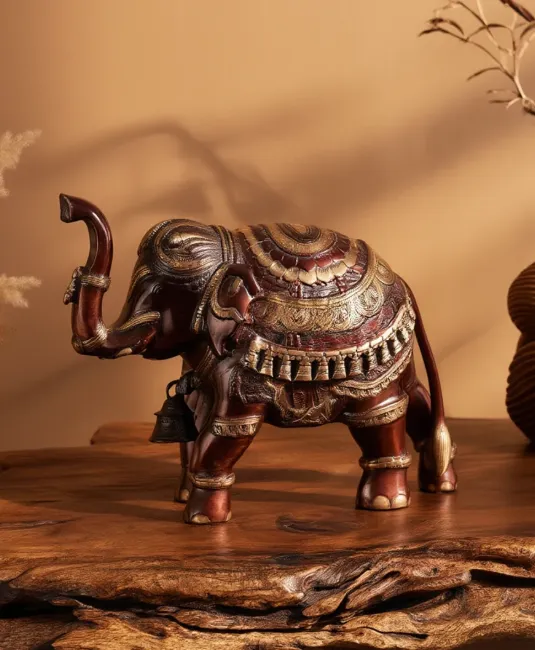
A beautifully designed home rarely comes from buying more things. It comes from choosing the right things and knowing where they belong. The best home decor stuff doesn’t compete for attention. Instead, each piece adds texture, balance, personality, or a story to the room. Decorating a compact apartment or a spacious villa, understanding a few styling principles can save you from expensive mistakes and help every purchase earn its place.
Why Do Some Homes Feel Instantly Memorable Even Before You Notice the Furniture?
The most inviting homes have a clear visual focal point. Instead of scattering decorative pieces across every surface, they guide your eyes naturally through thoughtful placement, balanced proportions, and layered textures.
Walk into a thoughtfully styled home and something feels different. It isn’t necessarily the handmade rug or the designer sofa. Your eyes instinctively know where to rest.
Interior designers often build a room around a visual anchor. It could be a handcrafted brass sculpture on a console, an oversized ceramic vase, or an artisanal wall hanging. Once that anchor is established, every other decor piece supports it rather than competing with it.
A well-balanced room usually follows three simple principles:
- One dominant statement piece that attracts attention.
- Two or three supporting accessories that create depth.
- Empty space that allows each object to breathe.
Ironically, the empty space is just as important as the decor itself.
| Styling Principle | What It Does |
| Visual anchor | Creates the room’s focal point |
| Layered textures | Prevents the room from looking flat |
| Negative space | Reduces visual clutter |
| Balanced proportions | Keeps the room feeling harmonious |
Why Does Buying More Home Decor Stuff Often Make a Room Look Worse?
Decorating isn’t about filling every shelf. Too many decorative objects compete for attention, making even expensive interiors feel cluttered. Well-designed homes prioritize placement over quantity.
Many people decorate like they are completing a checklist.
A vase? Check.
Candles? Check.
Statues? Check.
Photo frames? Check.
The result often feels more like a showroom than a lived-in home.
Professional stylists follow a simple rule: every decorative object should serve a purpose. It should either introduce texture, balance the composition, add height, or tell a story.
Before buying another decorative piece, ask yourself:
- Does this add a new texture?
- Does it balance the room visually?
- Does it create contrast?
- Would removing it make the room look better?
If the answer is “no” to all four, you probably don’t need it.
Sometimes, removing three accessories improves a room more than buying one more.
Is Handmade Home Decor Really Worth Buying, or Is It Just More Expensive?
Handmade home decor stuff isn’t valuable simply because it’s handcrafted. Its appeal lies in natural variations, artisanal techniques, and the character that machine-made products cannot consistently replicate.
Two decorative brass sculptures may look similar in an online photo.
One comes from an assembly line.
The other has been shaped, carved, cast, or finished by skilled artisans.
The difference becomes obvious when you experience them in person.
Handmade objects carry subtle variations in texture, patina, carving, or finish that reflect the maker’s craftsmanship. Those imperfections create visual depth, which is why they often continue to feel interesting long after the novelty of mass-produced decor fades.
Here’s a simple comparison:
| Handmade Home Decor | Factory-Made Decor |
| Individual character | Uniform appearance |
| Natural texture | Standardized finish |
| Artisan craftsmanship | Automated production |
| Often repairable | Frequently replaced |
| Decorative conversation piece | Primarily functional |
That doesn’t mean every room should only feature handmade objects. A thoughtful mix of handcrafted decor and modern furniture often creates the most balanced interiors.
Which Home Decor Stuff Gives the Biggest Visual Impact?
Without replacing the furniture, a few well-chosen decorative objects can completely change the atmosphere of a space. Focus on objects that introduce height, texture, warmth, and visual interest.
Instead of buying ten small accessories, invest in a few pieces that naturally command attention.
Decor pieces that consistently make the biggest impact:
- Brass sculptures that create a focal point on consoles or sideboards.
- Decorative vases with fresh stems or dried botanicals to add height.
- Handcrafted boxes that combine storage with display.
- Statement wall art that fills empty vertical space without overcrowding furniture.
- Decorative candle holders that introduce warmth during evenings.
A helpful rule many designers follow is the Rule of Three. Group objects in odd numbers using different heights. For example:
- Tall vase
- Medium brass sculpture
- Small decorative box
This arrangement naturally feels more balanced than placing three objects of identical size side by side.
How Do Interior Designers Decide Where Every Decor Piece Should Actually Go?
Interior designers don’t decorate randomly. They think about eye level, scale, lighting, proportions, and how people move through a room before placing a single decorative object.
A beautiful decor piece can lose its impact if it’s displayed in the wrong location.
Before placing any accessory, consider these questions:
- Is this the first thing someone notices when entering?
- Does the object’s size suit the furniture beneath it?
- Does natural or artificial light highlight its texture?
- Is it competing with another statement piece nearby?
- Does the arrangement feel balanced from different angles?
Good styling isn’t about perfection. It’s about intention.
Walk through your home tonight and look at every home decor stuff with fresh eyes. If a piece doesn’t contribute balance, texture, function, or a meaningful story, move it, regroup it, or let another object take the spotlight. Often, the difference between an ordinary room and one people remember isn’t spending more. It’s choosing home decor stuff that has a purpose and giving it the space to be noticed.